
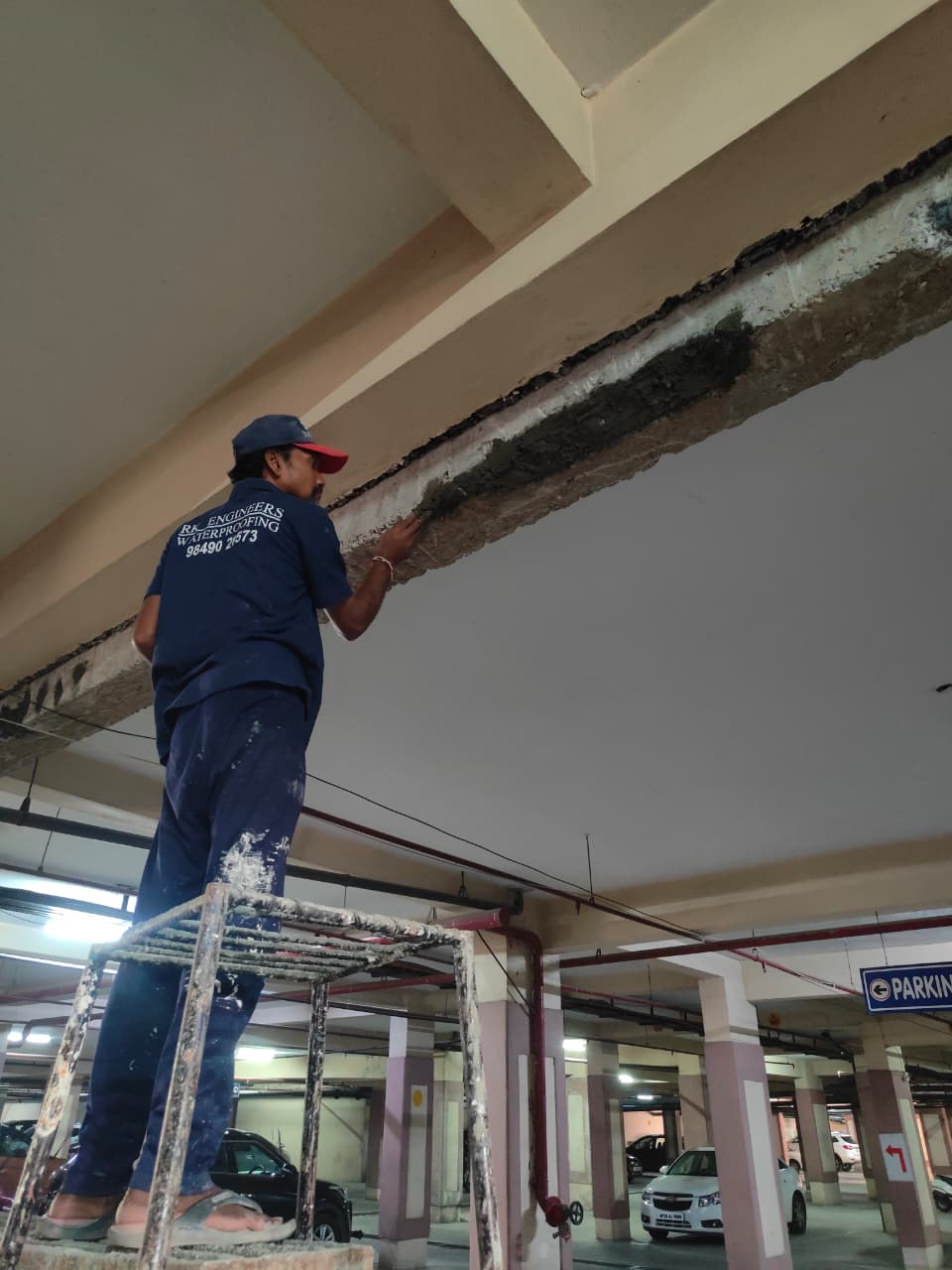
Introduction: What is Polymer Modified Mortar?
Polymer Modified Mortar (PMM) is a specially designed mortar that combines cement, sand, water, and polymers (latex or liquid additives) to improve adhesion, flexibility, and durability.
Unlike ordinary cement mortar, PMM offers superior bonding, crack resistance, and waterproofing properties, making it ideal for repairs, rehabilitation, and waterproofing works in modern construction.
Types of Polymer Modified Mortar:
Polymer Modified Mortars are classified based on the type of polymer used:
- Styrene-Butadiene Rubber (SBR) Modified Mortar
Most commonly used in structural repair works.
Features: Excellent bonding with old concrete, water resistance, and durability.
Best For: Structural repairs, waterproof plastering, bonding coats.
- Acrylic Polymer Modified Mortar
Acrylic-based polymers improve UV and chemical resistance.
Features: Flexible, weather-resistant, and non-yellowing.
Best For: External applications, protective coatings, and waterproofing.
- Epoxy Modified Mortar
Epoxy resins provide very high strength and chemical resistance.
Features: Superior adhesion, abrasion resistance, and chemical durability.
Best For: Industrial floors, chemical plants, and heavy-duty repair works.
- Vinyl Acetate Copolymer Modified Mortar
Offers moderate flexibility and water resistance.
Best For: General repair, plastering, and tiling works.
Key Properties of Polymer Modified Mortar
- Excellent Adhesion – Bonds strongly to old concrete, steel, and masonry.
- Improved Flexibility – Resists cracking due to thermal and structural movements.
- Water Resistance – Reduces permeability and prevents seepage.
- High Durability – Resistant to weathering, chemicals, and abrasion.
- Better Workability – Easy to apply with smoother finish.
- Shrinkage Resistance – Minimizes shrinkage cracks compared to conventional mortar.
- Enhanced Tensile & Flexural Strength – Provides longer service life.
Applications of Polymer Modified Mortar
- 1. Structural Repairs
Repairing spalled/damaged RCC members (columns, beams, slabs).
Used with bonding agents for high-strength rehabilitation.
- Waterproofing Works
Internal and external plastering with integral waterproofing compounds.
Sumps, overhead tanks, basements, and swimming pools.
- Flooring and Industrial Repairs
Epoxy-modified mortars for high-strength industrial floors.
Repairing cracks and damaged areas in heavy-duty zones.
- Tiling and Masonry
Fixing ceramic tiles, stones, and masonry units with strong adhesion.
Acts as a bonding mortar for thin-set tile applications.
- Protective Coatings
Acrylic-modified mortars for external facades, bridges, and marine structures.
Provides UV, water, and chemical resistance.
- Bonding Layers
Applied as a thin bonding coat between old and new concrete/mortar layers.
Advantages of Using Polymer Modified Mortar
- Extends the life of structures
- Reduces long-term maintenance costs
- Provides waterproofing and durability in one system
- Suitable for both old and new construction
- Eco-friendly and non-toxic (when using SBR/Acrylic systems)
Why Choose RK Engineers for Polymer Modified Mortar Applications in Hyderabad?
With 25+ years of expertise in structural repairs and waterproofing, RK Engineers offers reliable polymer modified mortar solutions tailored to project needs.
- Skilled team of engineers and technicians
- Use of high-quality SBR, Acrylic, and Epoxy systems
- Advanced repair methods ensuring long-lasting results
- Cost-effective and transparent pricing
- Guaranteed structural stability and water resistance
FAQs on Polymer Modified Mortar
Q1. What is the difference between normal mortar and polymer modified mortar?
PMM has added polymers that enhance adhesion, flexibility, and water resistance compared to normal cement-sand mortar.
Q2. Is polymer modified mortar safe for potable water tanks?
Yes. SBR and Acrylic-based mortars are non-toxic and safe for sumps, tanks, and drinking water structures.
Q3. How thick can polymer modified mortar be applied?
Generally, PMM is applied in 10–50 mm thickness, depending on repair needs.
Q4. How long does PMM last?
With proper application, PMM repairs can last 15–20 years or more.
Q5. Can PMM be used for waterproof plastering?
Yes. SBR or Acrylic modified mortars are ideal for waterproof plastering in basements, bathrooms, and external walls.
Conclusion
Polymer Modified Mortar (PMM) is a versatile, durable, and high-performance material that has transformed the way we handle structural repairs, waterproofing, and protective coatings.
By choosing expert application from RK Engineers, you ensure leak-proof, long-lasting, and cost-effective solutions for your structures.
📞Call RK Engineers today at 09849028573 for professional Polymer Modified Mortar applications in Hyderabad.
Recent Comments