Introduction: Why Waterproofing is Essential
Waterproofing is one of the most important steps in construction to protect buildings from water seepage, dampness, and structural damage. Without proper waterproofing, water ingress can lead to cracks, corrosion of reinforcement, wall dampness, and reduced building lifespan.
Over the years, several waterproofing systems have been developed. The choice depends on the type of structure, exposure conditions, and durability required. Let’s explore the most widely used waterproofing systems:
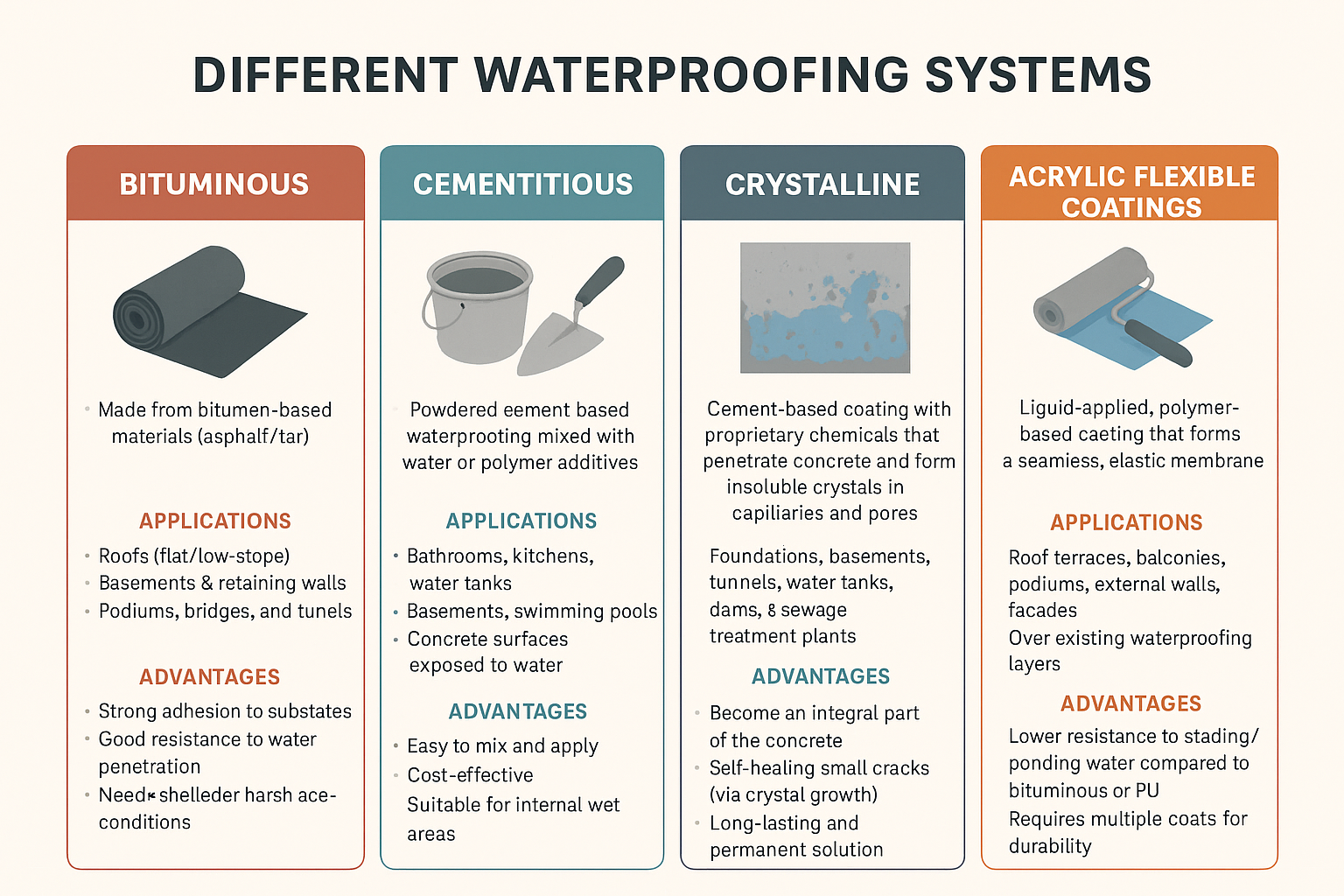
1. Bituminous Membrane Waterproofing
What is it?
Bituminous membrane is a flexible, torch-applied or self-adhesive waterproofing sheet made of asphalt (bitumen) reinforced with polymers.
Applications:
1. Roofs and terraces
2. Underground basements
3. Water tanks and foundations
4. Bridges and retaining walls
Advantages:
· Highly durable and long-lasting
· Provides excellent water resistance
· Suitable for large roof areas
· UV resistant (modified membranes)
2.Cementitious Waterproof Coating
What is it?
Cementitious coatings are cement-based waterproofing slurries applied on concrete or masonry surfaces. They form a rigid, seamless waterproof barrier.
Applications:
1. Bathrooms and toilets
2. Basements and water tanks
3. Sewage and water treatment plants
4. Internal wet areas
Advantages:
· Easy to apply (brush, roller, or spray)
· Cost-effective and widely available
· Strong bonding with concrete surfaces
· Non-toxic and safe for potable water
3. Crystalline Waterproof Coating
What is it?
Crystalline waterproofing uses chemicals that penetrate into concrete pores and form insoluble crystals, blocking water pathways permanently.
Applications:
1. Foundations and basements
2. Tunnels and retaining walls
3. Water tanks, sumps, and reservoirs
4. RCC slabs and podiums
Advantages:
· Permanent self-healing of micro-cracks
· Becomes an integral part of concrete
· Highly durable and long-lasting
· Excellent resistance to hydrostatic pressure
4. Acrylic Flexible Waterproof Coating
What is it?
Acrylic waterproofing is a liquid-applied, flexible coating made of acrylic polymers. It forms an elastic membrane that can bridge cracks and withstand structural movements.
Applications:
1. Roof terraces and balconies
2. External walls and facades
3. Sunken slabs and podiums
4. Sloped roofs and domes
Advantages:
· Highly flexible with crack-bridging properties
· UV and weather resistant
· Available in different colours for decorative finish
· Eco-friendly and easy to apply
Comparison of Waterproofing Systems:
Waterproofing System Flexibility Durability Best Application Areas
Bituminous Membrane High 10–15 years Roofs, basements, foundations
Cementitious Coating Rigid 8–12 years Bathrooms, tanks, internal areas
Crystalline Coating Semi-flexible 20+ years Basements, tanks, tunnels
Acrylic Coating Very high 8–12 years Roofs, facades, terraces
Why Choose RK Engineers for Waterproofing in Hyderabad?
With 25+ years of expertise, RK Engineers delivers advanced waterproofing systems tailored to different building needs.
Expertise in bituminous, cementitious, crystalline, and acrylic systems
1. Safe, durable, and eco-friendly materials
2. Guaranteed leak-proof performance
3. Affordable and transparent pricing
4. Trusted by residential, commercial, and industrial clients Conclusion
Different structures require different waterproofing systems depending on their exposure, durability, and usage. Whether it’s bituminous membranes for roofs, cementitious coatings for tanks, crystalline waterproofing for basements, or acrylic coatings for terraces, professional application ensures long-lasting protection.
For expert waterproofing services in Hyderabad, trust RK Engineers to provide customized, reliable, and cost-effective solutions.
📞 Call us today at 09849028573 for a site inspection and professional waterproofing consultation
E mail: info@rkengineers.co.in
Recent Comments