
Structural Health Monitoring Techniques
Introduction: Why Structural Health Monitoring is Important
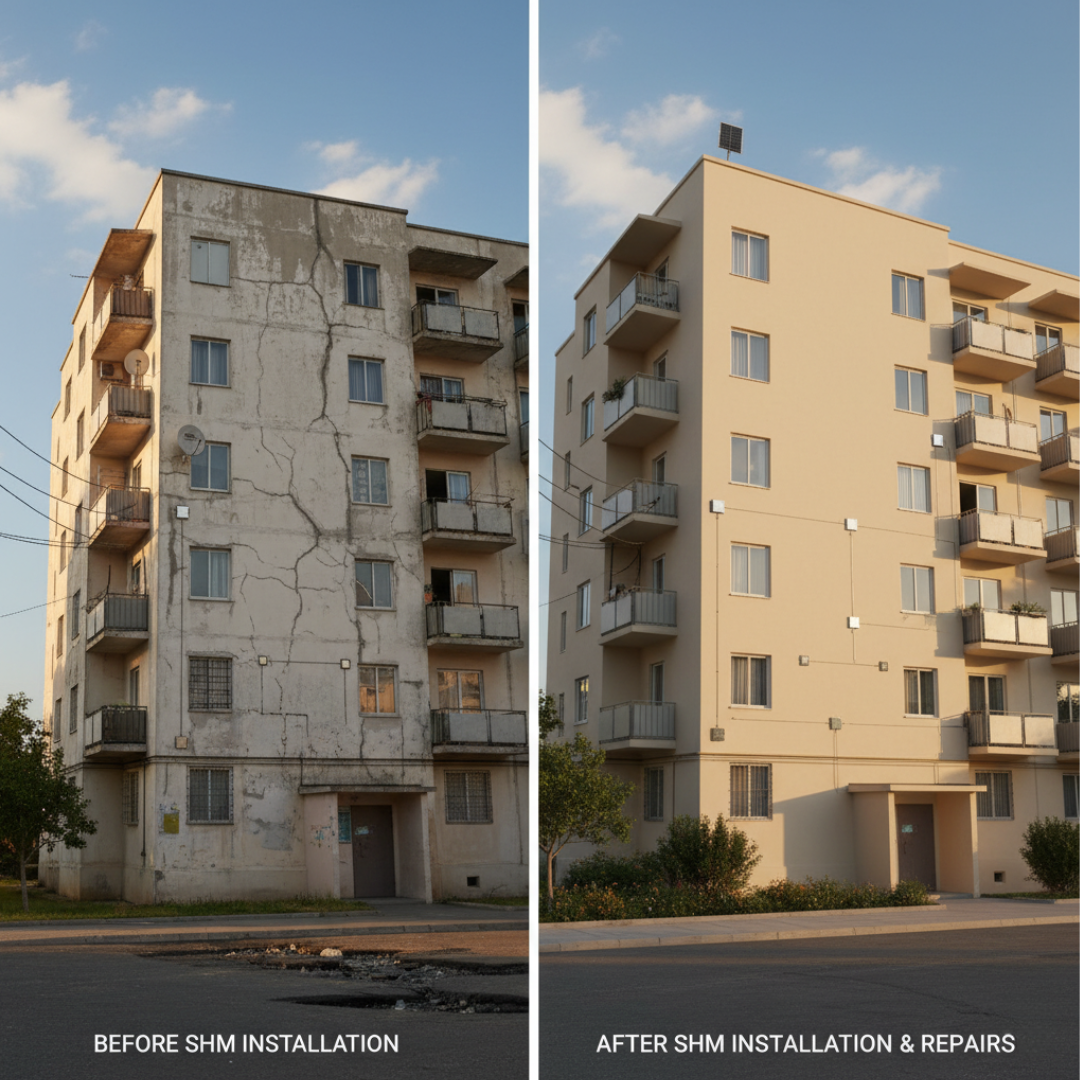
Are you worried about cracks, vibrations, or weakening in your building or infrastructure? Over time, bridges, commercial complexes, apartments, and industrial structures in Hyderabad undergo stress, aging, and environmental damage. If not monitored, these issues can lead to safety risks, costly repairs, and even structural failures.
The solution is Structural Health Monitoring (SHM). By using advanced technologies and techniques, SHM helps detect potential issues early, ensuring safety, durability, and cost savings.
If you are searching for structural health monitoring services in Hyderabad, RK Engineers is your trusted partner with expertise in advanced monitoring solutions for all types of structures.
What is Structural Health Monitoring?
Structural Health Monitoring (SHM) is the process of using sensors, data collection systems, and analytical techniques to continuously assess the safety, performance, and durability of structures like buildings, bridges, and industrial facilities.
This ensures timely detection of damage, reduced maintenance costs, and improved safety standards.
Common Structural Problems That Need Monitoring
* Cracks in concrete and RCC structures
* Corrosion of steel reinforcements
* Water leakage and dampness
* Excessive vibrations in bridges and towers
* Foundation settlement issues
* Material fatigue and aging damage
Best Structural Health Monitoring Techniques
1. Visual Inspection & Non-Destructive Testing (NDT)
A fundamental step that includes ultrasonic testing, rebound hammer test, and crack width monitoring.
Advantages:
- Cost-effective
- Detects early-stage damage
- Ideal for periodic maintenance
2. Vibration-Based Monitoring
Sensors are used to track vibrations, natural frequencies, and structural responses.
Benefits:
- Detects structural stiffness loss
- Useful for bridges and high-rise buildings
- Identifies dynamic load impacts
3. Fiber Optic Sensor Monitoring
Uses :fiber optic cables embedded in structures to measure strain, stress, and temperature.
Why It Works:
- High accuracy
- Real-time monitoring
- Resistant to electromagnetic interference
4. Acoustic Emission Monitoring
Detects stress waves produced by crack formation within structures.
Advantages:
- Early warning of structural failure
- Non-invasive
- Useful for RCC tanks, pressure vessels, and pipelines
5. Wireless Sensor Networks (WSN)
Modern IoT-enabled SHM systems deploy wireless sensors to continuously monitor structures.
Key Benefits:
- Real-time data collection
- Low maintenance
- Scalable for large infrastructures
6. Strain Gauge Monitoring
Measures stress and strain levels in beams, columns, and slabs.
Benefits:
- Detects overloading
- Helps in structural optimization
- Widely used in bridges and towers
Step-by-Step Structural Health Monitoring Process
1. Preliminary Assessment– Identifying structural risks
2. Sensor Installation – Placing vibration, strain, or fiber optic sensors
3. Data Collection– Monitoring real-time structural responses
4. Analysis– Using software for condition assessment
5. Reporting – Preparing actionable maintenance reports
6. Maintenance & Repair – Implementing solutions before failures occur
Why Choose RK Engineers for Structural Health Monitoring in Hyderabad?
- 25+ years of expertise** in SHM and waterproofing solutions
- Advanced **sensor-based & IoT-enabled technologies**
- Trained professionals for accurate data interpretation
- Affordable, reliable, and long-lasting solutions
- Trusted by leading clients in Hyderabad
Call Now: 9849028573
Visit: RK Engineers – Structural Health Monitoring Services
FAQs on Structural Health Monitoring
Q1. Why is structural health monitoring necessary?
It ensures early detection of cracks, vibrations, and material fatigue, preventing costly failures.
Q2. Which structures need SHM services?
Bridges, high-rise buildings, industrial plants, water tanks, flyovers, and heritage structures benefit from SHM.
Q3. What is the cost of structural health monitoring in Hyderabad?
It varies depending on structure size, sensors used, and monitoring duration, usually starting from ₹15–₹50 per sq. ft.
Q4. How often should SHM be done?
For critical structures, continuous monitoring with sensors is recommended; for residential/commercial buildings, annual inspections are sufficient.
Q5. Can SHM prevent structural failures completely?
Yes. By providing real-time data and predictive insights, SHM helps prevent sudden failures and extends structural life.
Ensure your building or infrastructure is safe and durable with expert monitoring.
Get Professional Structural Health Monitoring in Hyderabad](https://rkengineers.co.in/)
Call Now: 09849028573
Conclusion:
Structural Health Monitoring is not just a safety measure—it’s an investment in durability, reliability, and peace of mind. By choosing RK Engineers’ advanced SHM services in Hyderabad, you can prevent unexpected failures, save on costly repairs, and ensure the long-term safety of your property.
Share your thoughts in the comments, give us your feedback, and don’t forget to share this blog with colleagues and friends who might benefit from SHM services.
Recent Comments